
Egg Mops
by Gail Wellenstein, Kitsap Beach Naturalist
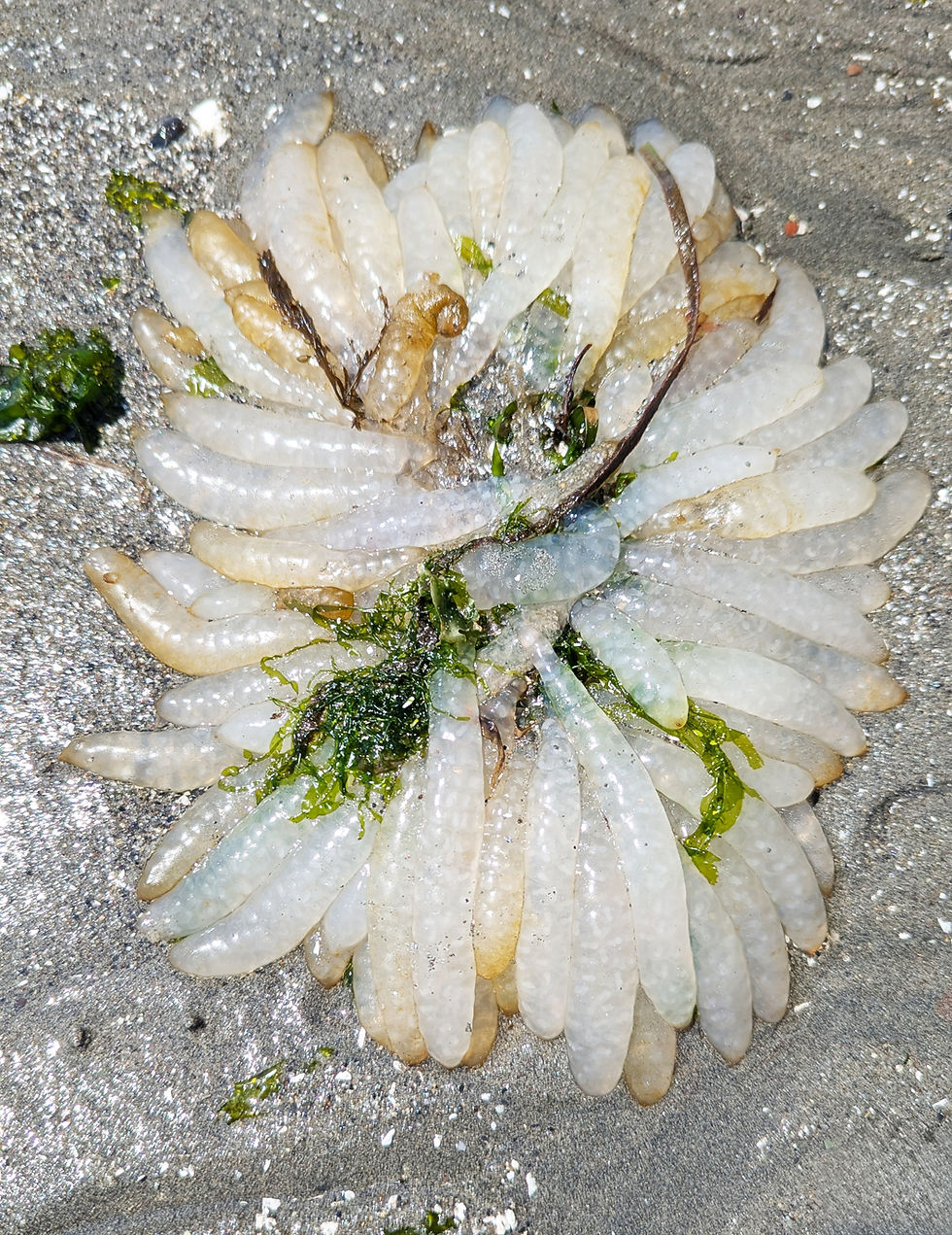
Saltair Beach in Kingston is a different world at extreme low tides. Large rocks, covered in barnacles, appear and reward the curious with views of sea stars in their natural habitat. Sand lances hide out in the eelgrass, while moon jellyfish can be found among the sea lettuce stranded on the shore. The observant beach walker is rewarded with evidence of life in deeper waters by the presence of eggs from species that come to the shallows to spawn. The “egg mop” of the opalescent inshore squid, aka California market squid, is one of the most recognizable of the egg clusters.
The market squid is named for its high commercial food and bait value. Restaurants call it calamari, a more appealing name to the majority of diners. Like their other common name implies, they inhabit a narrow band of 200 miles along the eastern Pacific from Baja to Alaska. These squid make a daily vertical migration, hiding in depths more than 600 feet during the day to avoid predators such as salmon, orcas, and seals, and rising to the surface at night to feed on small fish, squid (yes, they are cannibals), and crustaceans.
A mature adult, a mere eight months old, is eight inches in length, including tentacles, and is a translucent white with a faint bluish tinge and opalescent patches. Like the octopus, they can change colors to match their surroundings or their mood, ranging from red to gold. They also have large eyes and eight arms but differ in having two triangular fins and two feeding tentacles.
These squid are mass spawners, with thousands to millions of them moving simultaneously to shallow sandy waters to lay their eggs in clusters of capsules. Each capsule is made of layers of a gelatinous protein coated with bacteria to fend off fungi and contains around 200 eggs. It is anchored to 12-20 other capsules and to the bottom by a sticky substance. The capsules in the cluster can wave around in the current, supplying the eggs with fresh oxygen and looking rather like a string mop being sloshed around in the wash bucket. In three to five weeks, the one-inch-long larvae hatch and immediately swim and feed on plankton. At two months they are six inches long, and they begin to form groups of 10 or more and hunt for larger prey, such as small fish. They reach sexual maturity at eight months and die after spawning.
There was a remarkable absence of these squid in the Salish Sea between 2001 and 2015. Because of their short lifespan their population is very sensitive to changes in the environment. During this time period, there were multiple La Nina events, with colder water, pushing the population to the warmer waters of southern California. The bottoming out of the population occurred between 2013 and 2015 when “The Blob” formed in the North Pacific. This was an historical marine heat wave that caused a crash in zooplankton and other food sources and forced any surviving schools to migrate away or die off completely. This population crash affected their main predators as well. Salmon, diving birds like rhinoceros auklets, porpoises and seals all had to search for alternative food sources, with varying degrees of success. The population began to rebound in 2016 providing improved food sources for their top predators, but also putting more pressure on their prey, such as forage fish, an important food source for salmon. Time will tell how this boom in population will play out, and whether the anticipated super El Nino will cause another bust.


Comments